A plane takes off, a multiplier climbs from 1.00x, and somewhere between 1.2x and 50x the round ends without warning. No countdown, no pattern, no mercy for players who hesitate. This single mechanic has turned a visually simple game into one of the most-played crash-style titles across online casinos, and the reason is straightforward: the math behind it rewards discipline far more than luck alone.
Most players jump in after watching a highlight clip of someone cashing out at 40x, assuming the game is pure chance dressed up with an airplane animation. That assumption is only half true. Before placing a single wager, it helps to understand exactly how aviator game works under the hood, because the round generation process determines everything else - payout ceilings, realistic cash-out timing, and why chasing a big multiplier repeatedly drains a bankroll faster than steady, smaller wins.
This piece breaks down the mechanics, the rules that govern fair play, the payout structure, the RTP and odds a player actually faces, and a betting approach built on probability rather than hope. By the end, you'll know exactly what you're wagering on and how to size bets accordingly.
How Aviator Game Works
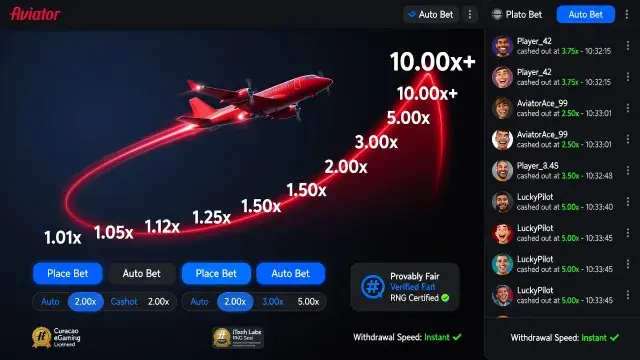
Aviator belongs to a category known as crash games, distinct from slots or table games because there's no reel, no card deck, and no dealer. Instead, a single visual element - a plane ascending along a curve - represents a multiplier that increases continuously from the moment a round begins. Players place a wager before takeoff and must click "cash out" before the plane flies away. If they do it in time, they win their bet multiplied by whatever value was showing on screen. If they wait too long, the round crashes and the wager is lost entirely.
The Core Game Loop
Each round follows an identical rhythm: a brief betting window, a takeoff phase where the multiplier climbs, and an abrupt end point determined the instant the round starts (though hidden from players). The simplicity is deliberate - there are no side mechanics, bonus rounds, or special symbols competing for attention. The entire game hinges on one decision made under time pressure: when to exit.
The Role of Provably Fair Technology
Reputable versions of the game use a cryptographic system called provably fair, which generates the crash point before the round starts using a hashed algorithm. Players can verify after the fact that the result wasn't manipulated. This matters because it confirms the outcome isn't adjusted based on how many players bet or how much money is at stake in a given round - the multiplier ceiling is fixed by math, not by house intervention.
Why the Curve Feels Unpredictable
The multiplier's growth rate is randomized within a defined statistical range, which is why some rounds crash at 1.03x and others soar past 20x. There is no pattern to detect, no "hot streak" hiding in the code. Recognizing this early prevents the common trap of believing a losing streak makes a big multiplier "due."
Aviator Game Rules
The rules are minimal by design, but understanding each one precisely changes how a player approaches timing and bet sizing.
Placing a Bet Before Takeoff
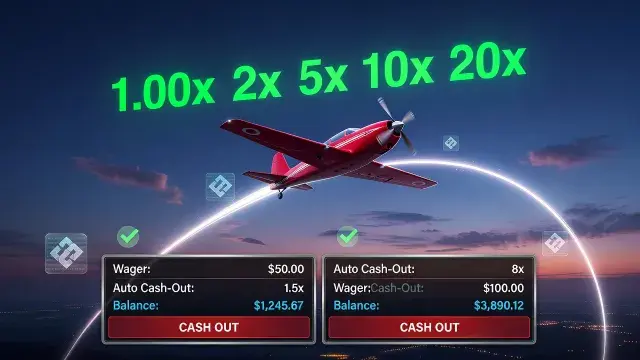
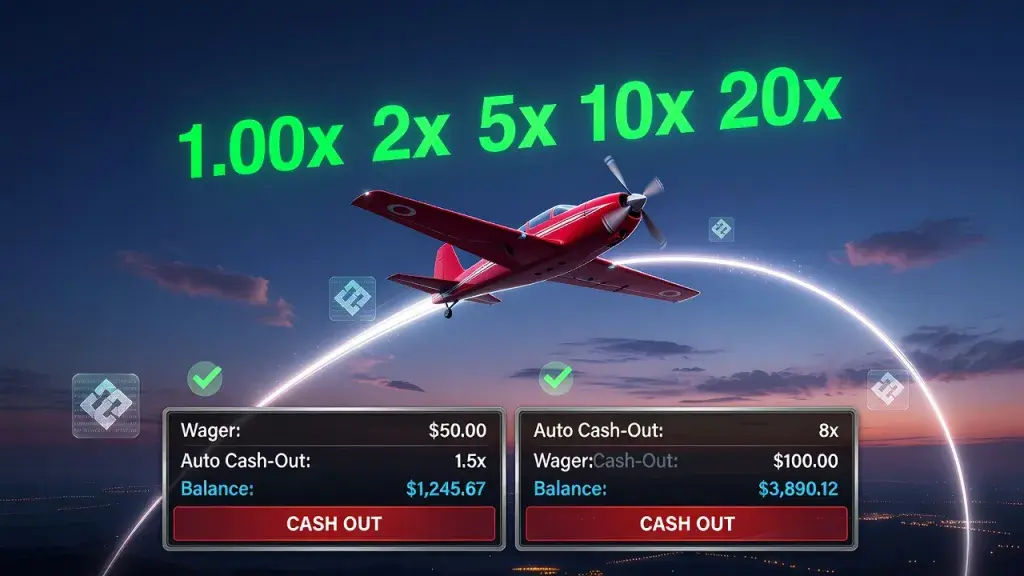
Betting only happens during a short window - typically a few seconds - before the plane begins its ascent. Most platforms allow two simultaneous bets per round, letting a player run one conservative cash-out alongside one higher-risk attempt.
Cashing Out Manually or Automatically
Manual cash-out means clicking the button in real time, which introduces reaction-time risk during busy rounds or slow connections. Automatic cash-out lets players pre-set a target multiplier, removing hesitation and emotional decision-making from the equation - a detail that matters more than most beginners realize.
What Happens When the Round Crashes
Once the plane disappears, every uncashed bet in that round is lost in full. There's no partial refund and no grace period. This binary outcome is the entire risk structure of the game, and it's why the aviator game rules emphasize timing discipline over multiplier greed.
- Bets must be placed before the round starts - no late entries.
- Two concurrent bets per round are usually allowed.
- Auto cash-out settings execute instantly at the chosen multiplier.
- A crash before cash-out forfeits the entire wager.
Aviator Game Payout
Payout in this game is refreshingly simple to calculate: wager multiplied by the cash-out point equals the return. A $10 bet cashed out at 3.5x returns $35. There are no paylines, no symbol combinations, and no hidden payout tables to decode.
How Multipliers Are Capped
While theoretical multipliers can climb into the hundreds, most rounds end well below 10x. The distribution is heavily weighted toward lower multipliers, meaning big wins are real but statistically rare events layered on top of frequent small losses or modest gains.
Comparing Payout Frequency to Payout Size
This is the central tension of the aviator game payout structure: cashing out early and often produces frequent small wins, while holding out for large multipliers produces long losing stretches punctuated by occasional large payouts. Neither approach is objectively "correct" - they represent different risk tolerances.
Bet Sizing and Payout Consistency
Because payout scales linearly with multiplier, bet size has no effect on the odds of a crash occurring - it only affects the magnitude of the win or loss. A common mistake is increasing bet size after a loss expecting a "correction," which has no basis in how the round generation actually functions.
Aviator Game RTP and Odds
Return to Player figures for this game typically sit in the mid-to-high 90s percentage range, consistent with other crash-style and live casino products. RTP is a long-run statistical average, not a guarantee for any individual session, but it does explain why the house maintains a stable edge over thousands of rounds.
What RTP Actually Measures
If the RTP is set at 97%, the game returns 97 units for every 100 wagered across a large sample size. The remaining 3% is the built-in house edge, distributed invisibly across the multiplier curve rather than taken as a flat deduction.
Odds of Reaching Specific Multipliers
The odds of hitting higher multipliers drop sharply as the target increases. Reaching 2x happens far more often than reaching 10x, and reaching 10x happens far more often than reaching 50x. This inverse relationship is the mathematical backbone of the aviator game RTP and odds structure - the higher the target, the smaller the probability, and the payout scales up to compensate for that shrinking chance.
Why Odds Don't Change Between Rounds
Each round is statistically independent. A crash at 1.1x doesn't make the next round more likely to fly higher. Treating rounds as connected - a common cognitive error known as the gambler's fallacy - leads directly to poor bankroll decisions.
Aviator Flight Betting Strategy
A workable strategy here isn't about predicting the crash point - that's impossible by design. It's about managing exposure so that variance doesn't wipe out a bankroll before the long-run math has a chance to play out.
The Fixed Cash-Out Approach
Setting an automatic cash-out at a conservative multiplier, such as 1.5x or 2x, produces frequent wins with modest payouts. This method suits players prioritizing bankroll longevity over occasional big scores, and it removes the temptation to hold out "just a bit longer" during a live round.
The Split-Bet Method
Using both available bet slots, a player might set one bet to auto cash-out early at 1.3x to recover stake quickly, while letting the second bet ride toward a higher target like 5x or 10x. This hedges against total loss while preserving upside potential.
Bankroll Allocation and Stop-Loss Discipline
Effective aviator flight betting strategy depends less on multiplier choice and more on strict unit sizing - wagering a small, fixed percentage of total bankroll per round (commonly 1-2%) and stopping after a predefined loss limit. This single habit prevents the emotional escalation that turns a manageable losing streak into a wiped-out account.
Avoiding the Chase
After a near-miss - cashing out at 1.4x right before a round hits 30x - the instinct is to increase the next bet to "make up" for missed profit. This is precisely the moment discipline matters most, since the odds haven't shifted at all.
Frequently Asked Questions
Can you predict when the plane will crash?
No. The crash point is generated using a provably fair algorithm before the round begins, and it isn't influenced by betting patterns, previous rounds, or visual cues on screen. Any strategy claiming to predict crash points with consistency is misrepresenting how the randomization works.
Is it better to cash out early or aim for high multipliers?
Neither approach changes the underlying odds, only the risk profile. Early cash-outs produce steadier, smaller returns, while chasing high multipliers means enduring longer losing stretches for the chance at a large payout.
Does bet size affect my chances of winning a round?
No. The multiplier curve and crash point are independent of wager amount. Betting more only increases the potential payout and potential loss - it has no bearing on when the round will end.
What's a realistic RTP to expect from this game?
Most licensed versions operate in the mid-to-high 90s percentage range, similar to other crash-style games. This figure reflects long-term averages across thousands of rounds, not the outcome of any single session.
Why did I lose several rounds in a row even with a low cash-out target?
Even conservative targets like 1.5x can be missed if the round crashes earlier, and short losing streaks are statistically normal given the game's variance. This is exactly why bankroll management and stop-loss limits matter more than adjusting the cash-out target mid-session.
Are the two simultaneous bet slots necessary to play effectively?
They're not required, but they allow for hedged strategies where one bet secures a quick, low-risk return while the other targets a larger multiplier. Players who prefer simplicity can use a single bet with one clear cash-out plan instead.