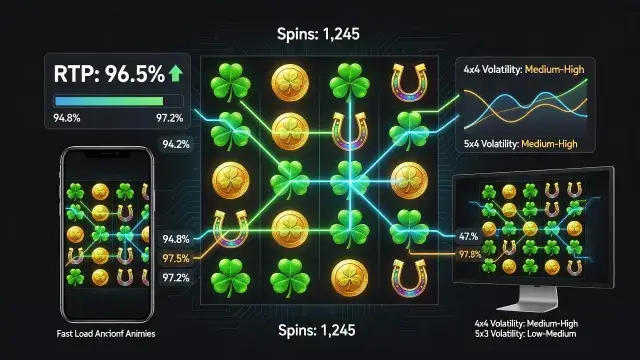
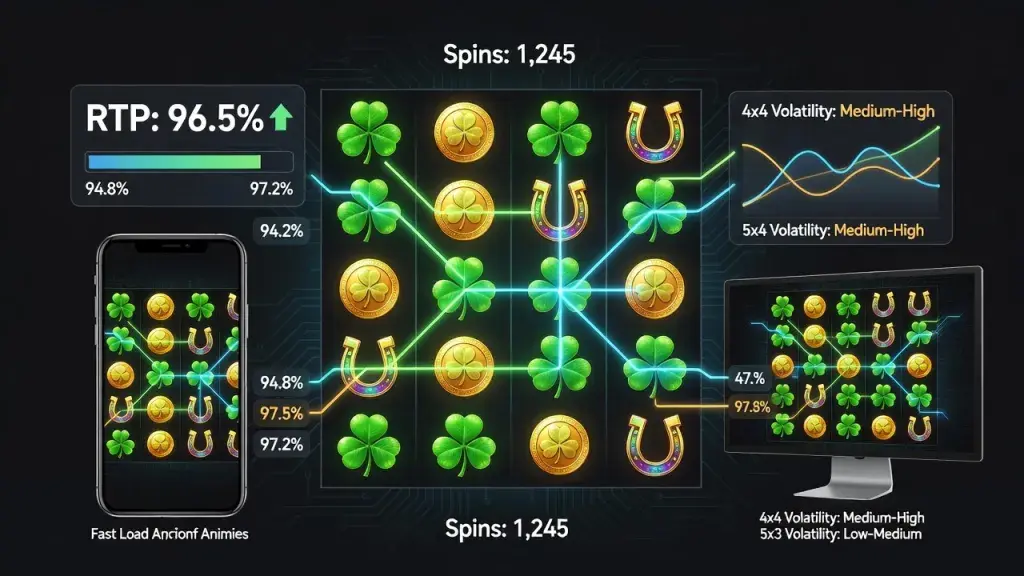
A one-percent difference in return to player might sound trivial, but over ten thousand spins it can separate a slot that pays back steadily from one that drains a bankroll fast. That distinction matters enormously when evaluating a compact, fast-paced title like clover coins 4x4 slot, where the reduced grid size changes how often symbols connect and how volatility behaves compared to standard five-reel machines.
Most players approach a new slot by checking the paytable first and the RTP figure second, if at all. That's backwards. The clover coins RTP rate tells you far more about long-term expectations than any single symbol payout, because it reflects the mathematical model behind thousands of simulated outcomes. Before loading real credits, it's worth checking the official listing for clover coins 4x4 rtp on the operator's game page, since RTP figures can occasionally vary slightly between regulated markets or software versions.
This piece breaks down exactly what the RTP number means for this specific title, how the 4x4 grid structure influences volatility and payout frequency, and what practical steps a player can take to align expectations with realistic outcomes. Nothing here is speculation - it's a grounded look at the mechanics driving one of the more compact slot formats currently in circulation.
What Is Clover Coins 4x4 and Why the Grid Size Matters
The Shift From 5x3 to 4x4 Layouts
Traditional slots default to a five-reel, three-row layout because it balances symbol variety with manageable volatility. A 4x4 clover coins game layout compresses that structure into sixteen total positions instead of fifteen, but arranges them into four equal columns and rows. This symmetry changes how paylines or cluster mechanics function - fewer diagonal or zigzag combinations exist, but adjacency-based wins become more frequent since every symbol touches more neighbors.
Why Developers Choose Compact Grids
Smaller grids load faster, animate more cleanly on mobile screens, and often support higher-frequency spin mechanics. For a clover-themed title built around luck and quick rounds, a 4x4 arrangement fits the pacing better than a sprawling reel set. It also simplifies the math model, which developers use to fine-tune the RTP with more predictable variance bands.
How Grid Size Interacts With RTP
RTP isn't determined by grid size directly, but grid size shapes how that RTP gets distributed across outcomes. A compact 4x4 field tends to produce more frequent small wins and fewer massive jackpot-style payouts, unless the game specifically includes multiplier mechanics or bonus triggers layered on top of the base structure.
Clover Coins 4x4 RTP: The Core Numbers
What the Percentage Actually Represents
RTP is a theoretical average calculated over millions of simulated spins, not a guarantee for any single session. If the clover coins 4x4 RTP sits in the mid-to-high 90s percentile range, that means for every 100 units wagered across the game's full lifecycle, that percentage theoretically returns to players collectively - not to any one individual in any one sitting.
Typical RTP Ranges for This Style of Slot
Compact grid slots with clover or luck themes generally land within a competitive band relative to industry norms, often close to what's expected from mid-volatility titles. Comparing the clover coins RTP rate against similar 4x4 or small-grid games gives a clearer sense of whether the return sits above, at, or below typical market standards.
- RTP figures are theoretical, calculated over extremely large sample sizes
- Actual short-term results can swing well above or below the stated percentage
- Regulated jurisdictions usually require RTP disclosure on the game info screen
Where to Verify the Official Rate
The safest way to confirm accuracy is checking the in-game information panel, usually accessed through a menu icon before spinning. Third-party slot databases sometimes list outdated or unverified figures, so cross-referencing with the operator's own disclosure remains the more reliable approach.
How Clover Coins Slot Return to Player Is Calculated
The Role of Simulation Testing
Before any slot launches, developers run extensive simulations - sometimes billions of virtual spins - to establish how the game's paytable, symbol frequency, and bonus triggers average out mathematically. The clover coins slot return to player figure emerges from this testing phase and gets locked into the game's core code before certification.
Symbol Weighting and Its Effect on Payouts
Not every symbol has an equal chance of landing. Low-value symbols like standard clover icons appear more frequently, while high-value or scatter symbols get weighted to appear rarely. This weighting directly shapes the RTP curve, balancing frequent small wins against occasional larger ones.
Independent Auditing and Certification
Licensed slots typically undergo testing by independent labs that verify the stated RTP matches the actual game code. This step protects both players and operators, confirming the published percentage isn't a marketing figure but a mathematically audited result.
Key Game Features That Influence Payout Behavior
Wild Symbols and Substitution Rules
Wilds typically substitute for standard symbols, increasing the odds of completing a winning combination. In a compact grid, wilds carry outsized influence because fewer total positions mean each wild landing affects a larger proportion of the board.
Scatter Symbols and Bonus Triggers
Scatters usually don't need to align on a payline - landing anywhere on the grid can trigger free spins or bonus rounds. These features often carry their own internal RTP contribution, meaning a chunk of the overall return comes specifically from bonus-mode play rather than base spins.
Multipliers and Their Impact on Volatility
Multiplier mechanics can dramatically increase payout ceilings without changing the base RTP percentage. They shift volatility upward, meaning wins become less frequent but potentially larger when they land - a common design choice for clover-luck themed titles aiming for dramatic bonus rounds.
How to Play 4x4 Clover Coins Effectively
Setting Realistic Bankroll Expectations
Given the compact grid and moderate volatility typical of this format, spreading a bankroll across more spins at a lower bet size generally produces smoother session experiences than large bets aimed at chasing rare big hits.
Reading the Paytable Before Wagering
Every payout tier, bonus trigger condition, and special symbol function gets listed in the paytable. Reviewing it before committing real funds prevents confusion about why certain combinations pay differently than expected.
Adjusting Bet Size Relative to Volatility
Because RTP is a long-run average, shorter sessions with smaller bets reduce the risk of hitting a statistically unlucky stretch that skews far below the theoretical return.
Comparing Clover Coins 4x4 to Other Slot Formats
4x4 vs Standard 5x3 Grids
Standard five-reel slots offer more paylines and often higher jackpot ceilings, but they can also dilute win frequency across a larger symbol field. The 4x4 format trades ceiling height for consistency.
4x4 vs Mega-Grid Cluster Slots
Larger cluster-pay grids with cascading mechanics tend to run higher volatility than compact 4x4 layouts. Players seeking steadier, more frequent smaller wins generally find compact grids better suited to that goal.
Frequently Asked Questions
Is a higher RTP always better for a player?
Higher RTP generally means better long-term expected returns, but volatility matters just as much. A high-RTP, high-volatility game can still produce long losing streaks despite a favorable theoretical percentage.
Does the RTP change based on bet size?
No, the RTP percentage remains fixed regardless of how much is wagered per spin. Bet size affects the absolute amount won or lost, not the underlying mathematical return rate.
Why does my actual play session not match the stated RTP?
RTP is calculated over millions of spins, not a single session of a few hundred. Short-term results naturally deviate from the theoretical average in either direction.
Can bonus rounds change the effective RTP I experience?
Yes, bonus rounds often contribute a specific portion of the overall RTP. Triggering them frequently or rarely during a session can shift your personal experienced return well away from the stated average.
How can I confirm the RTP is accurate before playing?
Check the in-game information panel, which regulated slots must display before wagering begins. This figure reflects the certified, audited version of the game rather than an estimate from a third party.
Does grid size alone determine how volatile a slot feels?
Not entirely. Grid size influences win frequency and adjacency patterns, but volatility ultimately depends on symbol weighting, multiplier mechanics, and bonus trigger frequency working together.